

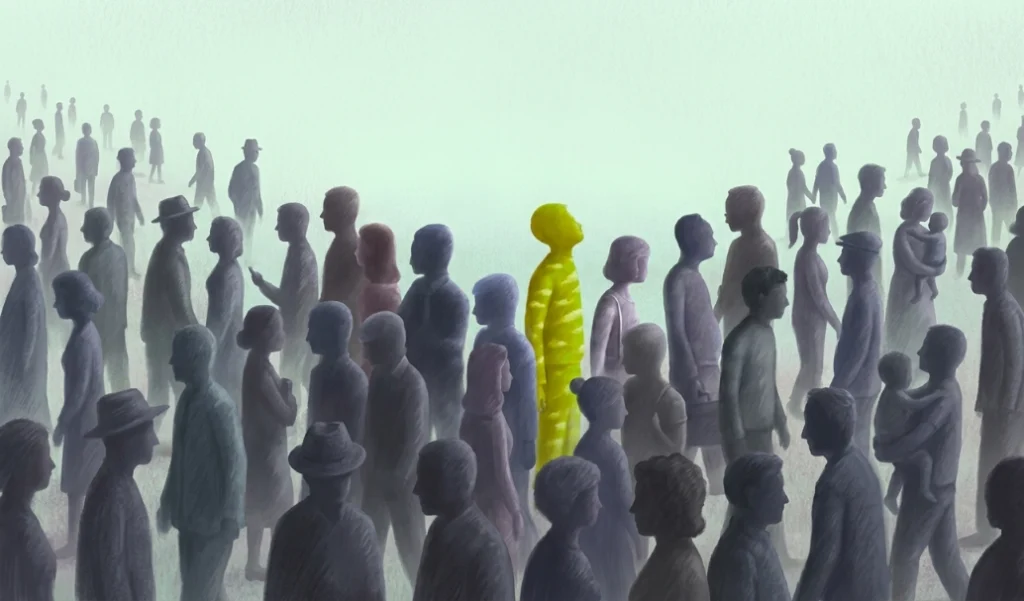
When most people hear the words Post-Traumatic Stress Disorder, a particular image surfaces — a combat veteran, returning from distant battlefields, carrying invisible weight through the routines of everyday life. That image is real, and it deserves every ounce of attention it receives. But it is not the whole picture. And for millions of people who are quietly suffering without the language to name what lives inside them, that narrow image can become a wall that keeps them from getting help.
PTSD symptoms show up in many lives, across many different kinds of stories. They don’t ask for a dramatic origin. They only ask whether your nervous system was pushed past what it could carry.
What PTSD Symptoms Actually Are & Who They Affect
PTSD does not require a passport. It does not ask how far you traveled or how dramatic your story sounds to someone else. For a child who grew up in a neighborhood where the sound of gunshots became ordinary — where survival meant reading every room before entering it, where danger was not an enemy overseas but a reality outside your front door — that was a war zone. The nervous system does not distinguish between the battlefield and the block. It only knows threat, and it responds accordingly.
“Trauma is not about the magnitude of the event. It is about the magnitude of its impact — on your nervous system, your sense of safety, and your understanding of yourself.”
How Trauma Lives in the Body and Mind
For survivors of abuse — those who experienced violence, control, or violation at the hands of someone who was supposed to love or protect them — the wound cuts in a particular way. It doesn’t just leave an imprint of pain. It reshapes how you understand trust, how you experience closeness, and whether you believe you are worthy of safety at all. The body remembers what the mind tries to move past. And no amount of time alone undoes that rewiring.
This is what makes PTSD so analytically complex, and so deeply human: it is less about what happened to a person and more about what happened inside them as a result. Two people can experience the same event and emerge in entirely different psychological places. That is not a measure of weakness. It is a reflection of history, biology, available support, and the meaning the mind assigns to the moment everything changed.
PTSD Symptoms in Daily Life: When Survival Strategies Outlast the Threat
Here is what this means in practice: the brain, in its effort to protect you, encodes traumatic experience not as a memory that fades with time — but as a present-tense alarm that never fully turns off. A smell, a tone of voice, a specific kind of silence — any of these can pull the past into the room as if it never left. Hypervigilance that the world calls anxiety. Emotional distance that gets mistaken for coldness. A relentless need for control that looks, from the outside, like ambition. These are not personality flaws. They are survival strategies that worked once, and have never been given permission to rest.
Trauma Recovery Isn’t About Going Back — It’s About Integration
This is where language matters. The word healing — while offered with the best intentions — can quietly mislead. It implies a return to a prior, undamaged state. But for many people, especially those whose trauma began early and shaped the architecture of who they became, there is no map back. The more honest, and ultimately more empowering, frame is integration. It is learning to understand what the experience took, what it changed, and what it quietly, unexpectedly built in you that you did not know you had. Post-traumatic growth is not the erasure of what you endured. It is the proof that what you endured did not define your ceiling.
“The goal is not to go back to who you were before. It is to build someone stronger from everything you’ve carried.”
How Trauma-Informed Therapy Makes Trauma Recovery Possible
Therapy — particularly trauma-informed approaches — provides the structured, safe space where that integration becomes possible. Not because a therapist has the answers, but because the therapeutic relationship itself offers something many trauma survivors have never fully experienced: a space where you are seen without judgment and heard without consequence. For those whose pain originated in relationship, that experience alone is quietly revolutionary. It begins to rewrite the story the nervous system has been telling — that closeness is dangerous, that vulnerability leads to harm, that you must manage everything alone to stay safe.
In that space, you don’t just learn coping strategies. You learn yourself — with context. You begin to see the intelligence in your own responses, the logic in what you built to survive, and the possibility of choosing something different now that you no longer need to fight so hard just to exist.
A Closing Thought
So let me ask you something — not as a clinician, but as someone who believes deeply in your capacity to grow: what if what you’ve been calling a flaw is actually a scar that never got tended to?
You don’t have to have the most dramatic story. You don’t have to have been to war. You just have to be someone who has been carrying something heavy for a long time — and be ready, even just a little, to set some of it down.
If any part of this resonated with you, I would be honored to be part of what comes next.
What people often ask us about trauma recovery
Yes. PTSD can develop after any experience where your safety, your life, or your sense of self felt genuinely under threat. Childhood abuse, domestic violence, community violence, serious accidents, medical trauma, and witnessing harm to others can all leave the same marks on your nervous system that combat does. The brain doesn’t sort threats by category. It responds to danger. And if that danger was chronic, unpredictable, or came from someone who was supposed to protect you, the impact can run even deeper than a single traumatic event.
It often doesn’t look like the diagnosis. It can feel like anxiety that never quite settles, or a constant low-level alertness you’ve come to think of as your personality. Emotional distance that reads as coldness. Difficulty sleeping. A need to control your environment that other people find exhausting. Responses to ordinary situations that feel out of proportion to what actually happened. Many people carry PTSD symptoms for years without naming them, because the picture they’ve been given of what PTSD looks like doesn’t match their own experience.
Trauma is the wound. PTSD is what happens when the wound doesn’t close. Most people go through distressing events at some point in their lives, and many recover over time with the right support around them. PTSD develops when your nervous system stays stuck in a state of threat long after the danger has passed. Memories don’t process the way they normally would. Triggers pull the past into the present. The distinction matters because PTSD has specific, well-researched treatment approaches, and naming it accurately is often the first step toward getting real help.
There’s no single answer, and any approach that promises one should make you cautious. Trauma recovery depends on how long the trauma lasted, when it started, what support was available at the time, and what kind of help you’re accessing now. Short-term trauma with good support can shift meaningfully in months. Complex trauma, or trauma rooted in early childhood or chronic relational harm, takes longer. What matters more than a timeline is finding a therapist who works in a trauma-informed way and building the kind of consistent, safe relationship where integration becomes possible over time.